Teaching Profile

Zeev Kirsh

Attorney. Mathematician. Performer. Available to teach at the college and independent high school level — full-time, part-time, or substitute. My credentials are real, my classroom presence is high-energy, and I am available now.

LawColumbia Law School, J.D. 2007 · Milbank Fellow
MathSUNY Stony Brook, B.S. Mathematics · Minor in Biology
High SchoolStuyvesant High School, New York City
BarNew York State (2008–Present) · SDNY · EDNY
PracticePaul Weiss · Cadwalader · Labaton Sucharow · Kirsh LLC
MusicPerforming musician · Multi-instrumentalist · Stage-comfortable
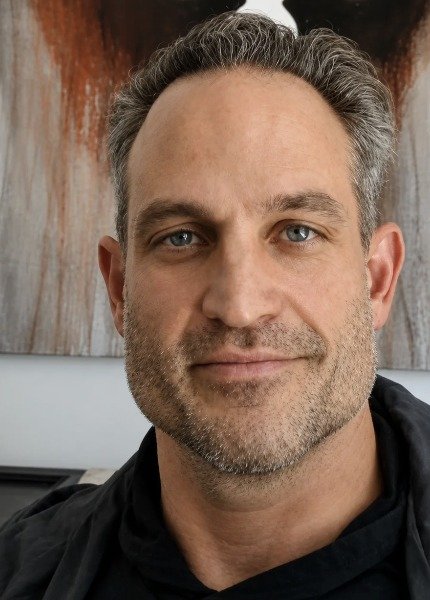
📸 Photo 1
📸 Photo 2
Degree
J.D. Columbia Law
Degree
B.S. Mathematics, Stony Brook
Alumnus
Stuyvesant High School
Fellowship
Milbank Fellow, Law & Economics
Experience
15+ Years Active Practice

What I Teach

Law & Legal Studies
Business Law
Contracts, business formation, commercial transactions — from fifteen years of active drafting
Legal Studies
American legal system, court structure, rights, civil and criminal procedure
Law & Economics
Milbank Fellowship. Intersection of legal reasoning and economic analysis
Law & Automation
How LLMs and AI are transforming legal practice, jurisprudence, and bureaucracy — the economics, ethics, and professional implications of AI in law
Mathematics & Quantitative
Mathematics
Algebra through calculus — Stuyvesant-trained, Stony Brook B.S. Mathematics
Statistics
Quantitative methods, applied statistics — Columbia: Statistics and the Law
Quantitative Methods
Data analysis and reasoning — applied throughout legal and investment career
Suitable Roles
College adjunct or lecturer
Independent / private high school
Substitute teacher
Debate advisor
Visiting lecturer
Guest instructor

How I Teach

High Energy
Performing musician. International conference speaker. Stage-comfortable and naturally energized by a room full of people who want to learn. I don't cover material — I make it impossible to look away.
⚖️
Real-World Authority
Every concept has a real case behind it. I've drafted the contracts students read about, been in federal court on the cases we analyze. Students get the inside view.
🧮
Mathematical Precision
Stuyvesant and Stony Brook trained me to think exactly. Whether law or calculus, I push students toward actual understanding — the kind you can apply, not forget after the exam.
🎵
Performer's Instincts
Years as a performing musician teach you how to read a room, adjust in real time, and hold attention. A great teacher and a great performer are solving the same problem.

Background

Legal Career
2017–Present
Owner / Managing Attorney — Kirsh LLC
Startup transactions, securities fraud litigation, blockchain compliance, venture advisory. FounderPool.co — $80M exit within 18 months.
2017–2018
Venture Fund Advisor — Distributed Network Advisers
Speeches, conference panels, international roadshows. Closed 20+ portfolio companies.
2013–2017
Staff Attorney — Paul Weiss LLP
Securities, antitrust, M&A, derivatives. Trained junior attorneys — a direct teaching function.
2011–2013
Staff Attorney — Labaton Sucharow LLP
Securities and antitrust class action litigation.
2008–2011
Partner — Kirsh & Nagi Law Group
Contracts, patent litigation, Lehman Brothers bankruptcy analysis.
2007–2008
Bankruptcy Associate — Cadwalader, Wickersham & Taft
DIP financing, 363 asset sales, reinsurance disputes.
Education
2004–2007
Columbia Law School — J.D.
Milbank Fellowship in Law and Economics. Coursework: Bankruptcy, Statistics and the Law, Patent Prosecution, Law & Economics, Corporate Law. Columbia Business School: Credit Derivatives, Capital Markets, Accounting.
1999–2002
SUNY Stony Brook — B.S. Mathematics
Minor in Biology. Quantitative training underlying everything since.
~1995–1999
Stuyvesant High School — Alumnus
NYC's most selective public science and mathematics high school.
Bar Admission
New York State Bar — 2008–Present
Southern District of New York · Eastern District of New York
zeev.org — Robotics Intelligence

Physical AI & Robotics

AI was the software story. Robotics is the physical economy story. I track the companies, technologies, and market structure behind the rise of physical AI: humanoids, drones, industrial automation, and the suppliers building the next decade of the real-world economy.

Goldman Sachs projects humanoid robots could reach a $38B market by 2035. Morgan Stanley models a path to $5 trillion by 2050. The most investable opportunities may not be the headline humanoid companies — they may be the boring suppliers who win regardless of which robot body prevails.

Understanding this transformation is not only a matter of finance and technology — it is one of the most important educational challenges of our time. The sociology of technology, and the sociology of the future, belong at the center of university curricula. Students who will spend their careers in a world reshaped by humanoid robots — in warehouses, hospitals, schools, construction sites, and homes — need frameworks to anticipate, interpret, and operate within that world. That means understanding not just which companies exist and what their robots do today, but how robotic deployment reshapes labor, power, urban design, legal systems, and social organization at scale. This is the kind of multi-decade, world-scale social transformation that universities exist to help people think clearly about — and it is what I aim to teach: the finance, the sociology, and the future, together.

Every company gets classified against a deployment ladder:
Stage 1
Viral Demo
Controlled environment. Not investable alone.
Stage 2
Controlled Pilot
Real customer, real environment — not yet proof.
Stage 3
Paid Deployment
Robot doing a real job, repeatedly. Thesis validates.
Stage 4
Scaled Revenue
Renewals, expansion, defensible economics. A business.
FigureTesla OptimusAgilityApptronik1XBoston DynamicsSanctuaryUnitreeDronesIndustrialMedicalConstruction
Related Thesis
Principle City

Robotic construction promises a 100× productivity leap in how cities are built — making it possible to create entirely new urban environments with dramatically better quality of life, at a fraction of current cost and time. When robots can build cities, the question of where and how humanity lives becomes an open question again for the first time in centuries. Principle City is the long-horizon thesis on what that means.

Read Principle City ↗
542K
Industrial robots installed, 2024
$38B
Goldman Sachs humanoid market, 2035
$5T
Morgan Stanley physical AI model, 2050
Installation growth vs. 10 years prior
zeev@zeev.org
📅 Schedule a Call LinkedIn Twitter / X Instagram YouTube Linktree ← zeev.org